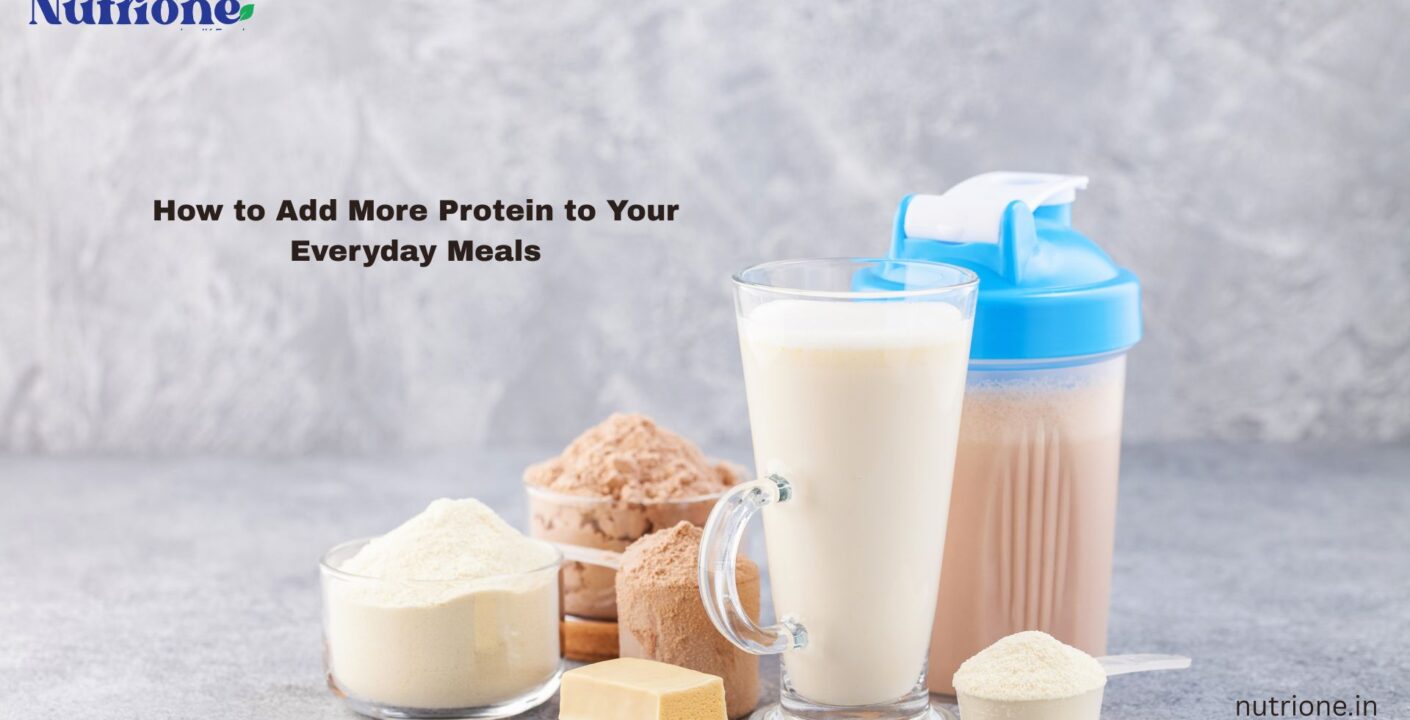
Adding more protein to your diet does not mean drinking multiple shakes or eating plain chicken every day. The easiest approach is to add a good protein source to meals you already eat, such as eggs at breakfast, dal with lunch, yogurt as a snack or paneer with dinner.
For most busy people, the problem is not a lack of protein options. It is that their meals are often built mainly around rice, roti, bread or snacks, with very little protein added.
Start by Looking at Your Current Meals
You don’t need to completely change your diet.
Look at what you already eat and ask one simple question:
Where is the main protein source in this meal?
For example:
| Usual Meal | Simple Upgrade |
| Tea + biscuits | Add eggs or yogurt |
| Plain oats | Add milk, Greek yogurt or nut butter |
| Rice + vegetables | Add dal, paneer, chicken or fish |
| Bread + tea | Add eggs or a protein-rich spread |
| Fruit alone | Add yogurt or a handful of nuts |
| Light dinner | Add paneer, eggs, dal or another protein source |
This small habit is more useful than trying to build an entirely new diet every Monday.
Make Breakfast Do More Work
Breakfast is often the easiest place to add more protein because many people already eat oats, milk, bread or eggs.
A bowl of oats made only with water may be filling, but adding milk or yogurt changes its protein content. You can also use protein oats when you want a quicker option that already fits into a higher-protein breakfast.
Another easy option is muesli with milk and yogurt. Add fruit for taste, then adjust the portion based on your hunger and daily needs.
If you like a sweeter breakfast, a spoonful of peanut butter can add flavour and make the meal more satisfying. Just remember that it is also calorie-dense, so more is not always better.
Don’t Rely on One Giant Protein Meal
One mistake I see often is someone eating very little protein all day and then trying to fix everything with a huge dinner or shake.
A more practical approach is to spread your intake across your meals.
For example:
Breakfast: Oats with milk and yogurt
Lunch: Rice or roti with dal, paneer, chicken or fish
Snack: Yogurt, milk or a simple muesli bowl
Dinner: Eggs, paneer, chicken, fish or another protein source with your regular meal
You do not need every meal to be perfectly balanced. The goal is simply to stop having several meals in a row with almost no protein.
Upgrade Your Usual Snacks
Most office snacks are low in protein.
Biscuits, chips and sugary drinks are convenient, but they often do very little to keep you full for long. You don’t have to remove them forever. Just make your usual snack routine a little smarter.
Try:
- Yogurt with fruit
- Muesli with milk
- Boiled eggs
- Roasted chana
- Paneer pieces
- Milk with a simple snack
- Apple with peanut butter
A flavour such as Chocolate Crunchy or Mango Creamy can also make a basic snack feel less repetitive.
The best high-protein snack is usually the one you can actually keep at home or take to work.
Use Protein as an Addition, Not a Separate Project
This is the easiest mindset shift.
Instead of asking, “What high-protein meal should I cook?”
Ask, “What can I add to what I’m already eating?”
Having poha? Add peanuts, yogurt or eggs.
Having dosa? Add a bowl of sambar and another protein source if needed.
Having rice for lunch? Make sure there is dal, curd, chicken, fish or paneer on the plate.
This is much easier to maintain than following a completely separate fitness diet.
Easy Protein Sources for Everyday Indian Meals
You have more options than chicken and protein powder.
Vegetarian options
- Dal and lentils
- Paneer
- Curd and Greek yogurt
- Milk
- Soy and tofu
- Chickpeas
- Rajma
- Peanuts and nut butters
Non-vegetarian options
- Eggs
- Chicken
- Fish
- Meat
The amount of protein varies between foods, so variety helps.
Use Convenience Foods When Life Gets Busy
Not every meal needs to be cooked from scratch.
If you leave for work at 8 AM and return home at 8 PM, complicated meal preparation usually fails after a few days.
Convenient options such as protein muesli, ready-to-eat yogurt, boiled eggs, milk and simple nut-based spreads can help fill the gaps.
Convenience is not cheating. It is part of building a routine you can follow consistently.
A Simple Protein-Focused Day
Here is what a practical day might look like for a busy professional who also trains.
Breakfast: Oats with milk, banana and yogurt
Mid-morning: Fruit and a small bowl of curd
Lunch: Rice, dal, vegetables and paneer or chicken
Pre-workout snack: Banana with a small serving of nut butter
Dinner: Roti or rice with eggs, chicken, fish, paneer or dal
The exact portions will depend on your body size, activity level and goal. The structure is what matters.
How Much Protein Should You Aim For?
Your requirement depends on body weight, activity level, training and your overall goal.
For people who train regularly, many sports nutrition guidelines use a range of around 1.2 to 2.0 grams of protein per kilogram of body weight per day, depending on the person and their training goals.
But don’t get so focused on calculating the perfect number that you forget the basics.
If your current diet provides very little protein, simply improving your breakfast, lunch and dinner can already make a noticeable difference.
The 20-Gram Meal Check
Here is a simple practical method.
Instead of checking every food you eat, look at your main meals and ask:
Does this meal contain a meaningful amount of protein, or is it mostly carbohydrates and fats?
For many active adults, aiming for roughly 20 to 40 grams of protein in a main meal can be a useful starting point, depending on body size and daily needs.
This is not a rule everyone must follow. Think of it as a quick check that stops you from accidentally building every meal around just rice, bread or snacks.
Don’t Forget Your Total Diet
Adding protein does not automatically make a diet healthy.
You still need carbohydrates for energy, dietary fats, fibre, fruits, vegetables and enough total calories for your goal.
Someone trying to gain muscle needs a different food intake from someone trying to lose fat.
Protein is important, but it should fit into a complete diet.
Frequently Asked Questions
Can I add more protein without using supplements?
Yes. Eggs, dairy, dal, paneer, soy, chicken, fish and other everyday foods can all help increase your intake.
Is peanut butter a good source of protein?
It contains protein, but it is also high in fat and calories. It works best as part of a balanced meal rather than being your only major protein source.
What is the easiest high-protein breakfast?
Oats with milk and yogurt, eggs with toast, or a bowl of muesli with dairy are all quick options.
Should I eat protein at every meal?
You don’t need to be perfect, but including a protein source in your main meals makes it easier to meet your daily needs.
Is more protein always better?
No. Your needs depend on your body size, activity level and goals. Extremely high intake is not automatically more beneficial.
Conclusion
The easiest way to eat more protein is to stop treating it as a separate diet.
Keep your usual meals, then improve them. Add eggs to breakfast. Add dal, paneer or chicken to lunch. Keep yogurt or muesli available for busy days. Build your dinner around a real protein source.
Small changes repeated every day usually work better than a strict meal plan you cannot follow for more than a week.