Getting more protein doesn’t always mean buying supplements or preparing separate meals. You can increase your daily intake by making small changes to foods you already eat, such as adding curd to breakfast, including paneer with lunch, or mixing milk and peanut butter into your oats.
For gym-goers and busy professionals, the goal is simple: make everyday meals more protein-rich without spending extra hours in the kitchen. A few practical swaps can make a meaningful difference over the course of a day.
Why Are You Not Getting Enough Protein?
Many people assume they eat enough protein because their meals contain rice, roti, vegetables and other nutritious foods. However, a balanced meal doesn’t automatically provide enough protein for someone who trains regularly.
For example, a breakfast of plain toast and tea may leave you with very little protein. Adding eggs, milk or curd can improve it without changing your entire routine.
The same applies to lunch and dinner. Instead of eating rice and vegetables alone, include dal, beans, paneer, eggs, chicken or tofu, depending on your preferences.
7 Simple Ways to Get More Protein From Everyday Foods
1. Add Milk or Curd to Your Breakfast
Milk and curd are easy ways to increase protein without much preparation. A 250 ml glass of milk generally provides around 8 g of protein, while the amount in curd depends on the type and serving size.
If you usually eat breakfast in a hurry, combine oats with milk and a banana. You can also use thick curd with muesli and fruit for a quick meal before work.
2. Make Your Oats More Filling
Oats contain some protein, but eating them with water alone may not provide enough for a substantial breakfast.
Prepare them with milk, then add peanut butter, seeds or curd according to your taste. Protein oats can be another convenient option, especially when you want a breakfast that requires minimal preparation.
The important thing is to check the nutrition label. Compare the protein per serving rather than assuming every product labelled as protein oats contains the same amount.
3. Stop Treating Dal as Just a Side Dish
Dal, rajma, chickpeas and other legumes can contribute useful amounts of protein alongside carbohydrates and fibre.
Instead of serving a small spoonful of dal with a large plate of rice, make the dal portion more substantial. You can also add curd or another protein source to the meal.
For a quick snack, boiled chickpeas with onion, tomato, lemon and spices are an easy alternative to packaged snacks.
4. Keep Eggs or Paneer Ready
If you eat eggs, boiled eggs are one of the simplest foods to prepare in advance. One large egg typically provides around 6 g of protein, making two eggs a useful addition to breakfast or an evening snack.
For vegetarians who consume dairy, paneer is another practical option. Add it to a sandwich, wrap, rice bowl or vegetable curry rather than preparing a completely separate meal.
These small additions are particularly helpful when you’re returning from the gym and don’t have time to cook from scratch.
5. Use Peanut Butter More Creatively
Peanut butter can help you add protein, fats and calories to meals you already enjoy. Spread it on whole-grain toast, mix it into oats or blend it with milk and banana for a quick smoothie.
However, it shouldn’t be your only protein source. A typical two-tablespoon serving provides roughly 7 to 8 g of protein, depending on the product and serving size.
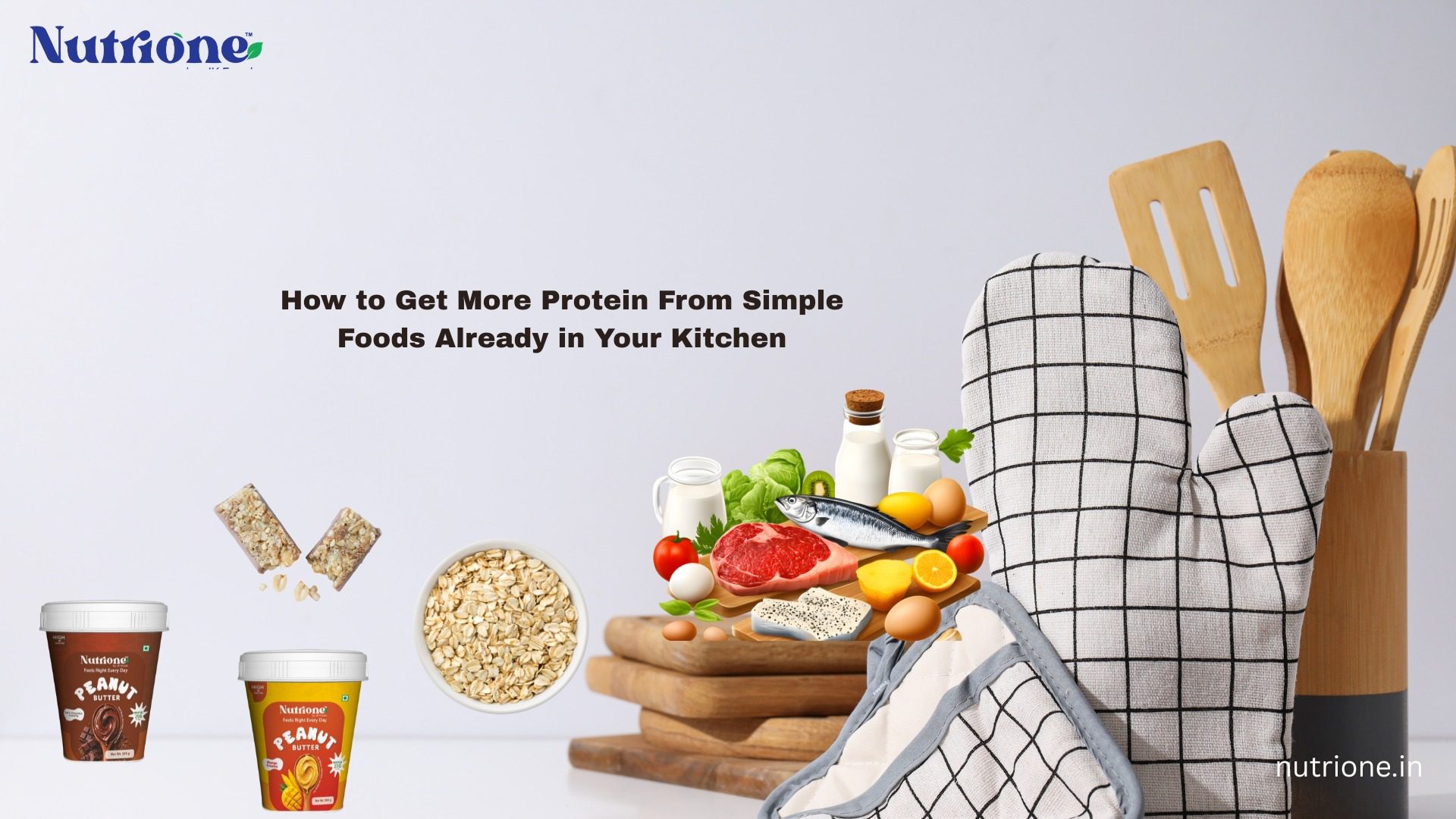
For a flavour variation, NutriOne’s Chocolate Crunchy and Mango Creamy options can be used in toast, breakfast bowls or smoothies. Choose the flavour you enjoy, but remember to check the nutrition information and serving size.
6. Upgrade Your Evening Snack
Evening snacks are an easy place to improve your daily protein intake. Biscuits, chips and tea may be convenient, but they generally contribute little protein.
Try curd with fruit, roasted chana, boiled eggs, a paneer sandwich or muesli with milk. Protein muesli can be especially convenient when you need something quick between work and an evening workout.
Check the serving size and protein content before choosing a product. Adding milk or curd may also help make the snack more substantial.
7. Add a Protein Source to Every Main Meal
You don’t need to calculate every gram of protein throughout the day. Start by checking whether breakfast, lunch and dinner each contain a meaningful protein source.
| Everyday meal | Simple upgrade | Why it helps |
| Toast and tea | Add eggs or milk | Increases protein at breakfast |
| Plain oats | Cook with milk and add peanut butter | Adds protein and energy |
| Rice and vegetables | Include dal, curd or paneer | Makes lunch more balanced |
| Biscuits with tea | Try roasted chana or curd | Provides a more useful snack |
| Roti and sabzi | Add dal, eggs, tofu or paneer | Improves the meal’s protein content |
| Plain muesli | Mix with milk or thick curd | Makes breakfast more substantial |
How Much Protein Should You Aim for Each Day?
Your needs depend on body weight, activity level, training goals and overall health.
For generally healthy adults, the basic recommended intake is around 0.8 g per kg of body weight per day. People who regularly perform resistance training often benefit from a higher intake, with around 1.4 to 2.0 g per kg being a commonly used range.
For example, a 70 kg person who lifts weights might aim for approximately 98 to 140 g daily, depending on their goals and circumstances. Around 112 g, or 1.6 g per kg, can be a useful starting point for many people.
You don’t have to reach that amount through one large meal. Spreading protein across the day makes it easier to manage and can support muscle growth when combined with appropriate training.
How Can Busy Professionals Make This Easier?
The biggest obstacle is often preparation, not a lack of food options. When you’re tired after work, a complicated meal plan is unlikely to last.
Keep a few convenient ingredients available: eggs, milk, curd, oats, roasted chana, paneer and cooked lentils. Prepare basic ingredients in advance when possible, and use quick options such as protein muesli or protein oats on particularly busy mornings.
You can also make a simple rule for yourself: before adding another snack to your day, ask whether it could provide some protein as well.
Common Mistakes to Avoid
One mistake is relying on a single food, such as peanut butter, to meet most of your protein needs. Variety makes it easier to obtain other nutrients and build meals that suit different situations.
Another is ignoring total food intake. If you’re training hard but eating too little overall, increasing protein alone may not resolve low energy or poor recovery.
Finally, don’t assume that an expensive product is automatically better. Everyday foods can contribute substantially to your intake, while packaged products are most useful when they fit your needs, budget and schedule.
Frequently Asked Questions
What are the easiest foods to eat for more protein?
Eggs, milk, curd, paneer, dal, chickpeas, soy, oats and roasted chana are practical choices. The best options are the ones you enjoy and can include regularly.
Can I get enough protein without protein powder?
Yes. Many people can meet their needs through ordinary foods, although those with higher requirements may find supplements convenient. Your total intake matters more than whether the protein comes from a powder or a regular meal.
Is peanut butter a good source of protein?
Peanut butter provides some protein, along with fats and calories. It’s useful as part of a meal, but foods such as eggs, dairy, paneer, soy and legumes generally make it easier to build a higher-protein diet.
Are protein oats and protein muesli worth buying?
They can be convenient when you have limited time to prepare meals. Compare the protein per serving, added sugar, ingredients and price before choosing one.
Should I eat more protein on workout days?
Your needs depend on your training and overall routine. Consistently meeting your daily protein needs is generally more useful than dramatically increasing intake only on workout days.
Conclusion
Getting more protein doesn’t require a complete change in your diet. Start with the meals you already eat and make them more useful by adding milk, curd, eggs, dal, paneer, soy or other protein-rich ingredients.
For gym-goers, these changes can help support muscle growth and recovery. For busy professionals, they offer a realistic way to improve everyday nutrition without spending hours cooking.
Start with one simple change today: upgrade your breakfast, improve your evening snack or add a better protein source to lunch. Repeat it consistently, and build from there.