If you’re trying to lose weight, plain oats or a well-balanced protein muesli are usually better choices because they’re filling and easier to control for calories. For healthy weight gain, oats or granola paired with calorie-dense foods such as peanut butter can make it easier to increase your intake.
The important part isn’t choosing the food with the healthiest-looking package. It’s understanding what you’re actually eating and how it fits into your daily calories and protein needs.
Muesli, Oats and Granola: What’s Actually Different?
They may look similar in the bowl, but they’re prepared differently.
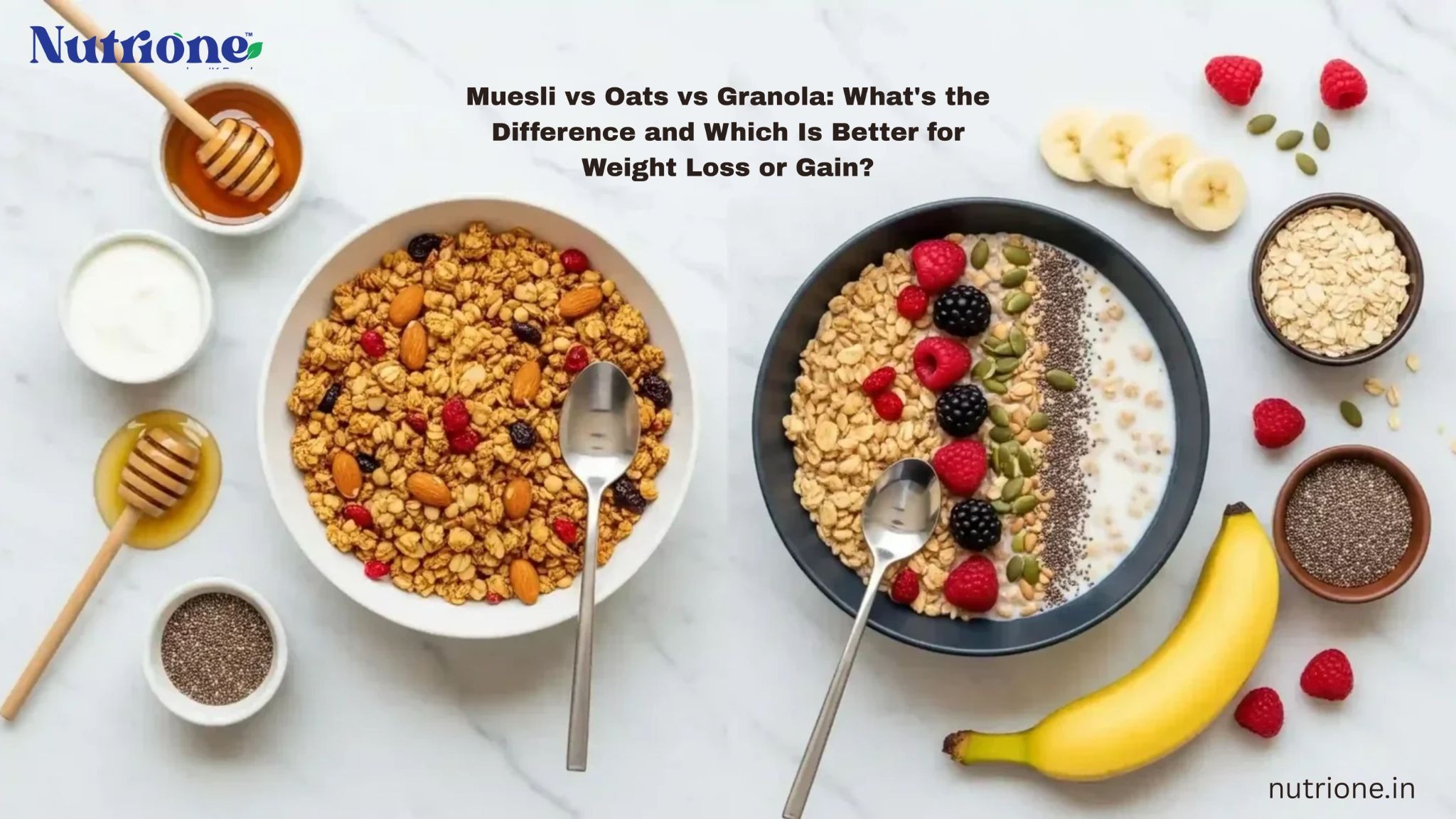
Oats are simply whole oat grains that have been processed into forms such as rolled or quick oats. They’re versatile, inexpensive and easy to build around.
Muesli is generally a mixture of oats, nuts, seeds, dried fruit and other grains. A protein-focused version can provide considerably more protein than a basic cereal breakfast.
Granola is usually a baked mixture of oats, nuts, seeds and a sweetener or oil. That baking gives it the crunchy texture people love, but it can also make it more calorie-dense.
Quick Comparison
| Factor | Oats | Muesli | Granola |
| Processing | Minimal | Lightly processed | Baked |
| Texture | Soft/creamy | Chewy/crunchy | Crispy |
| Typical calorie density | Lower | Moderate | Higher |
| Protein | Moderate | Moderate to high* | Moderate |
| Added sugar | Usually low if plain | Depends on product | Often higher |
| Weight loss | Excellent | Excellent when portioned | Can fit, but portion matters |
| Weight gain | Good | Good | Convenient for extra calories |
*Protein content varies significantly between products, so always check the nutrition label.
Which Is Better for Weight Loss?
Here’s where people often overcomplicate things.
Weight loss ultimately requires a calorie deficit. No bowl of oats automatically burns fat, and no bowl of granola automatically causes weight gain.
However, some choices make managing hunger much easier.
Plain oats are a strong option because you can control everything that goes into the bowl. Add milk, Greek yogurt, berries or a measured spoon of peanut butter, and you’ve got a breakfast that can keep you satisfied for hours.
Protein muesli can also work very well, particularly for someone who doesn’t want to cook in the morning. Choose a product with a useful amount of protein and watch the serving size.
Granola needs a little more attention. A small handful can turn into a large serving quickly because it’s crunchy, easy to eat and often contains added sweeteners or oils.
What About Weight Gain?
If you’re trying to gain weight, the goal isn’t simply to eat junk food. You want to increase calories while still giving your body useful nutrients.
This is where granola can be convenient. It packs more calories into a relatively small serving, especially when combined with full-fat yogurt, milk, fruit and nuts.
Oats work too. Add banana, milk, nuts and a spoon of Chocolate Crunchy Peanut Butter, and a basic bowl becomes a much more substantial meal.
For someone struggling to eat enough after training, this approach is often easier than forcing down another huge plate of food.
Which One Is Best for Gym-Goers?
Your training schedule should influence your choice.
If you’re eating before a workout, oats with banana can provide a straightforward source of carbohydrates without making the meal unnecessarily complicated.
After training, you can build a more complete meal with protein oats, milk or yogurt, fruit and a serving of peanut butter.
For a no-cook option, protein muesli with yogurt and fruit is hard to beat for convenience.
The best option is the one that matches your appetite, training time and total daily nutrition.
What Should Busy Professionals Choose?
This is where convenience matters.
You may know exactly what you should eat, but if breakfast takes 30 minutes to prepare, you’re probably not going to make it consistently when you’re rushing to work.
Protein muesli is useful here because you can pour it into a bowl, add milk or yogurt and eat.
Overnight oats are another good option. Prepare them at night and your breakfast is ready when you wake up.
For a higher-calorie breakfast, add Mango Creamy Peanut Butter with banana or whole-grain toast.
The goal isn’t to create a perfect meal. It’s to create one you’ll actually repeat.
How Much Should You Eat?
This is where even healthy foods can become a problem.
A common mistake is treating oats, muesli or granola as “free foods” simply because they’re considered healthy.
Your portion should match your goal.
For weight loss: Start with a moderate serving and add protein through yogurt, milk or another source.
For muscle gain: Increase the portion and add calorie-dense foods such as nuts or peanut butter.
For maintenance: Build a balanced bowl based on your normal hunger and activity level.
There’s no universal serving size that works for everyone.
A Simple Breakfast Formula
Instead of memorising complicated recipes, use this formula:
Base + Protein + Fruit + Healthy Fat
For example:
Oats + milk/yogurt + banana + peanut butter
or
Protein muesli + Greek yogurt + berries + nuts
For higher energy requirements:
Granola + full-fat yogurt + banana + nuts
This gives you plenty of room to adjust portions according to your fitness goal.
Don’t Judge a Product by the Front Label
Two products can both say “healthy breakfast” while having very different nutrition profiles.
Before buying, check:
- Protein per serving
- Fibre content
- Added sugar
- Serving size
- Ingredients
- Total calories
This matters particularly with granola, where the difference between brands can be significant.
Frequently Asked Questions
Is muesli better than oats for weight loss?
Not automatically. Both can work well. The better choice is the one with a suitable calorie and protein profile that keeps you satisfied.
Is granola good for gaining weight?
It can be. Its higher calorie density makes it convenient for people who struggle to eat enough, especially when combined with yogurt, milk, fruit or nuts.
Can I eat oats every day?
Yes. Oats can easily be part of a balanced daily diet. Change the toppings and protein sources to keep meals varied.
Can peanut butter be added to oats?
Absolutely. It adds flavour, healthy fats and some protein. Just remember that it’s calorie-dense, so portion size matters if you’re trying to lose weight.
Which is best before a workout?
Oats with fruit are a simple choice when you want carbohydrates before training. The ideal meal also depends on how close you are to your workout and how your stomach handles food.
Conclusion
There isn’t one universal winner.
For weight loss, oats and protein muesli are generally easier to manage because they can provide plenty of volume and nutrition without pushing calories too high.
For weight gain, granola, oats and muesli can all work. Adding calorie-dense ingredients such as Chocolate Crunchy or Mango Creamy Peanut Butter makes it easier to increase the energy content of your meals.
For busy professionals and gym-goers, consistency matters more than choosing the “perfect” breakfast. Pick something you enjoy, make it easy to prepare, and build it around your actual fitness goal.
A healthy breakfast isn’t the one that looks best on Instagram. It’s the one you can keep eating six months from now.